
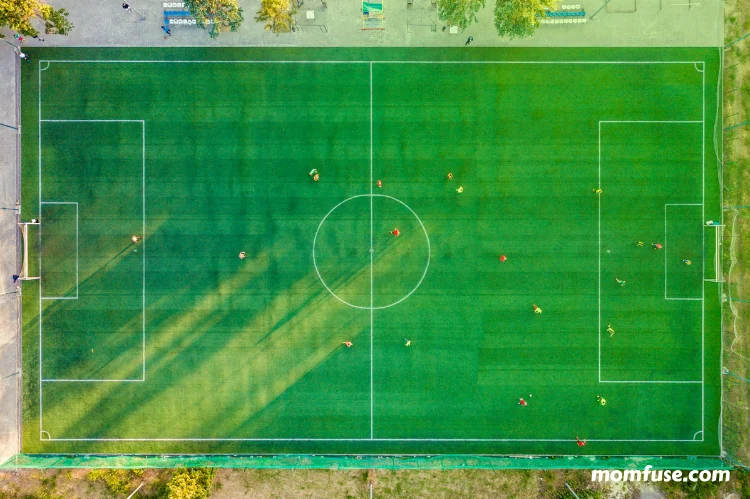

Ask any championship-winning coach for their secret, and you’ll likely hear the same principle: talent opens the door, but unity kicks it down. This isn’t just locker room wisdom.
If you suspect team chemistry is what’s holding your team back, the following frameworks offer practical, research-backed strategies you can implement this week.
1. Transform Practice into a Trust Laboratory
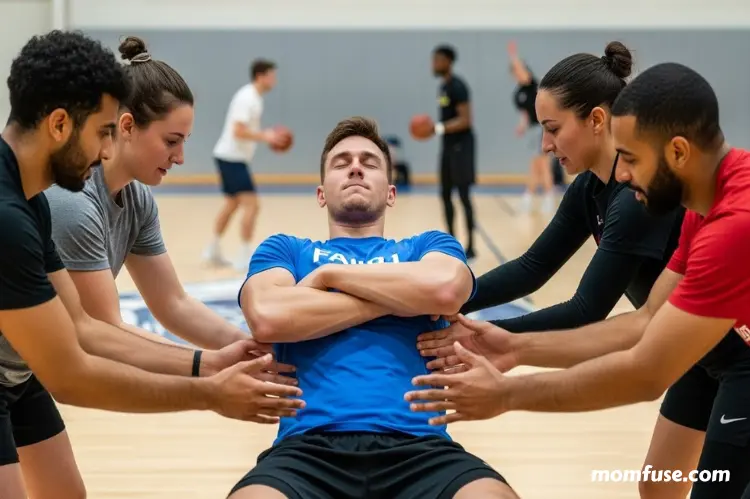
Most coaches dedicate practice time to fitness and tactics. The innovative twist is to intentionally integrate trust-building exercises directly into those workouts, requiring no extra sessions. When athletes practice relying on and supporting each other during drills, the muscle memory of cooperation transfers to high-pressure game situations.
Trust-Fall & Catch Drill
- Set up: Partner athletes from different positions, such as a striker with a defender, to break up existing cliques and foster new connections.
- Action: One athlete stands on a low, sturdy box and falls backward with their arms crossed, while their partner provides a secure catch.
- Debrief: Ask questions like, “What did it feel like to hand over control?” and “How does that translate to trusting a teammate’s decision on the field?”
Blindfolded Passing Challenge
- Equipment: A set of blindfolds, cones, and practice balls for the team.
- Flow: A blindfolded athlete must navigate a simple cone maze by following only the verbal instructions from a sighted teammate, concluding with a successful pass.
- Communication Focus: This drill highlights the need for precise, calm, and clear communication, which can be reviewed with video recordings.
3-on-3 Mini-Tournaments
- Setup: Use the final 20 minutes of practice for a series of short, high-energy games.
- Roster Rule: Randomly mix the teams and positions every round to ensure athletes work with everyone on the roster.
- Score Bonus: Award an extra point for observable acts of teamwork, such as an on-court high-five or verbal encouragement.
Pro Tip: Treat these drills as psychological conditioning. The ‘muscle memory’ of cooperation and trust built during practice is what transfers directly to high-pressure game situations, creating a more resilient team.
2. Use Off-Field Experiences to Forge Bonds
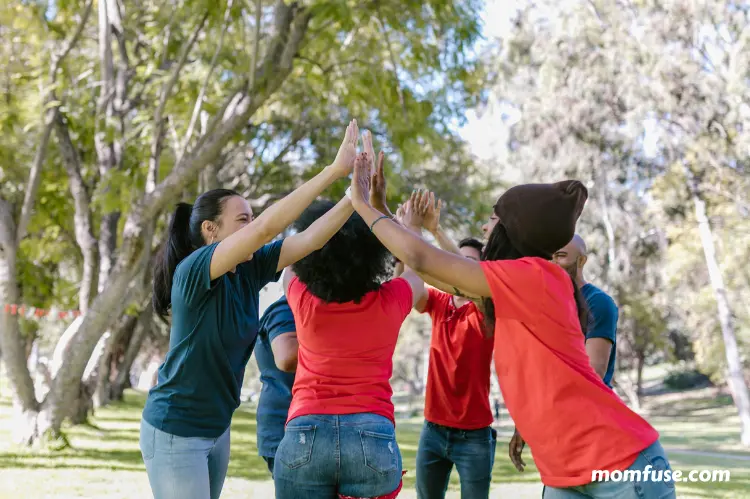
Creating a shared context outside of competition is crucial for rosters with new transfers or first-year players. These events reinforce a unified team identity, and providing matching gear like Sports Gear Swag’s custom football jerseys makes even simple events feel official, boosting collective pride.
Team Trivia Night
- Customization: Create trivia rounds that feature players’ childhood photos, unique pre-game routines, and memorable team victories from the past.
- Venue: Keep it simple by using the school cafeteria, a local community center, or a video call for teams that travel frequently.
- Pro Tip: Offer bonus points when players remember a teammate’s favorite hype song, as it demonstrates active listening and empathy.
Community Volunteering Session
Cause Match: Empower the team by letting them vote on a cause they care about, such as volunteering at an animal shelter or a youth sports clinic.
Roles: Rotate leadership responsibilities for the event. A team captain could handle logistics, while a rookie manages social media highlights.
Post-Match Reflection Circles
- Method: Use the simple “Rose–Bud–Thorn” framework where the rose is a highlight, the bud is an opportunity, and the thorn is a challenge.
- Duration: Keep the session brief to a 10-minute maximum to maintain focus and respect everyone’s time after a game.
- Outcome: This structured reflection shifts the team’s perspective from assigning blame to identifying opportunities for collective improvement.
3. Inject Game-Like Competition into Team Building

Humans are wired for play and friendly competition. Introducing a low-stakes rivalry within the team activates dopamine, which improves learning retention and engagement. This is exactly what you need when installing new tactics or reinforcing team principles.
Problem-Solving Relay
- Design: Create a relay race that combines a physical challenge, like a shuttle run, with a cognitive puzzle, such as a lock-box code.
- Blueprint: For example, a player sprints to midfield, completes a task, collects a puzzle piece, and relays back. The team must assemble the puzzle to reveal the final task.
Cross-Position Interviews
- Pairings: Intentionally pair players from different ends of the field, such as a goalkeeper with a forward or a setter with a libero.
- Guided Questions: Provide prompts like, “What is the most stressful part of your role?” and “What could teammates do to make your job easier?”
- Share-Out: Have each athlete summarize their partner’s insights to the entire group to build powerful empathy.
Celebrate Small Wins Ritual
- Implementation: Create a physical “Wall of Fame” with index cards highlighting selfless acts or use a digital log in a team chat channel.
- Sustainability: Assign a new player each week to be the “Ritual Captain” responsible for capturing and sharing these small wins.
Key Insight: The science is simple: friendly competition releases dopamine, which is linked to better learning retention. This makes low-stakes games a powerful, engaging tool for installing new team tactics and principles.
The Bottom Line
Team cohesion isn’t a luxury; it’s a competitive advantage that directly translates to the win column. By weaving these creative strategies into your team’s routine, you can systematically build the trust and shared identity that define championship-level squads.
- Transform Practice into a Trust Laboratory: Use trust falls, blindfolded challenges, and mixed-roster tournaments to hard-wire cooperative instincts.
- Leverage Off-Field Experiences: Trivia nights, volunteer days, and reflection circles deepen the personal bonds that elevate on-field performance.
- Utilize Game-Like Competition: Problem-solving relays and cross-position interviews infuse fun while sharpening empathy and strategic thinking.
Start with just one of these frameworks at your next practice. Observe how your athletes communicate and support each other under pressure. This is how you can begin building that performance boost into your team’s reality.
Author Profile: Sports Gear Swag is the leading online retailer of custom sports apparel and gear for teams, schools, and organizations of all sizes. Specializing in team jerseys, uniforms, and athletic apparel with a wide range of customization options.
Read Next: Team Spirit Signs: Design Bold, Durable Displays Anywhere

Jessica Fuqua is a mom of two who writes about the messy, beautiful reality of raising kids. She believes parenting advice should feel like a conversation with a friend, not a lecture. When she’s not writing, she’s probably reheating the same cup of coffee for the third time.