
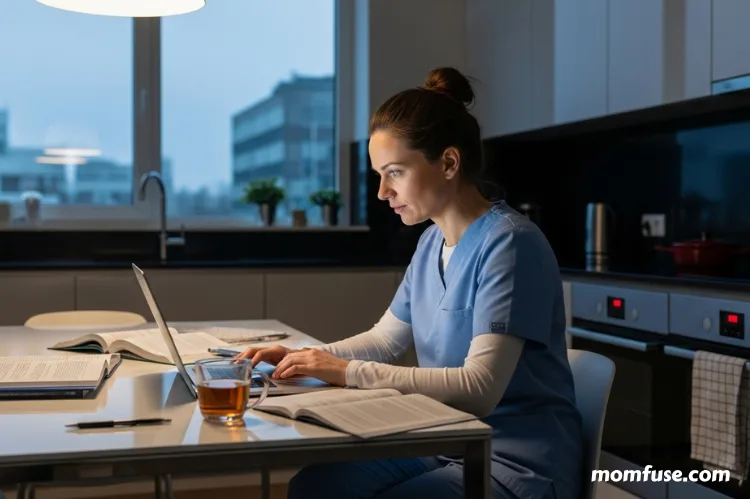

You carry lunch boxes, calendars, and a phone that cannot be switched off. You also juggle goals. Whether you are taking your school run or reading bedtime stories, there is a question that is simply tapping on your shoulder. What comes next for you?
Nursing is a serious alternative being considered by many moms. The pull is personal and practical. You want steady work. You want meaning. You desire a route that does not overlook the skills you already use daily. Nursing, where a family nurse practitioner (FNP) serves, almost all of those boxes, to the list, with fewer surprises than one might imagine.
Triage is learned in the second year of a child’s life. You sort needs fast. You read faces. You remain composed in times of crisis. Nursing values those habits. It is one of the reasons for the increasing demand for route options such as an FNP degree online, which can be integrated with family life. These programs usually add remote coursework to face-to-face clinical hours, grounding the learning process while providing flexibility.
Why nursing keeps showing up on your radar
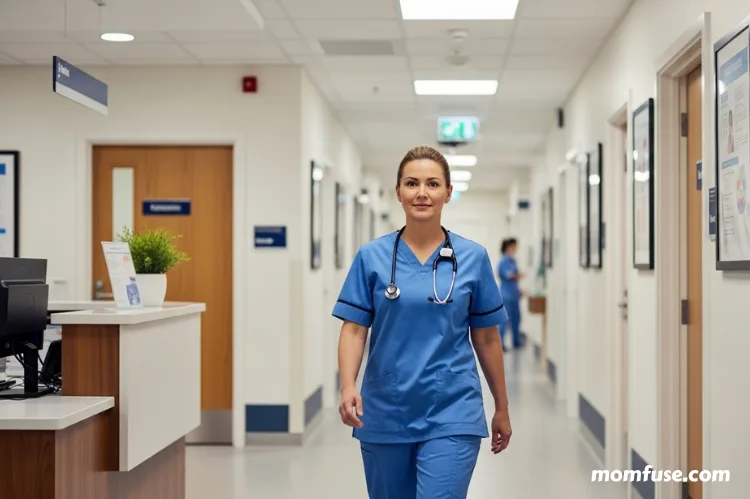
Nursing offers a wide field. You may ultimately work in hospitals, clinics, schools, and community health. You can change environments with time. According to the U.S. Bureau of Labor Statistics, demand for registered nurses is stable across regions and specialties, and the rise with projected growth through the next decade.
There are also fluctuating schedules.
There are positions that are within normal business hours. Shifts can be clustered by others. There is no customized schedule. Most mums prefer the freedom of choice over a narrow path. Pay matters too. Nurses’ wages also depend on the state, position, and experience. Government statistics assist you in making comparisons and avoiding guesswork.
Hybrid learning explained

Hybrid learning combines online and face-to-face learning, adapting your education to your lifestyle. You do lectures, reading materials, and quizzes online. You continue to go to labs, simulations, and clinical placements in the field. This model is created to safeguard hands-on training in schools.
In your case, the hybrid learning may be late-night reading after sleep and weekend lab sessions once every two months. It may also imply reduced daily commutes. Several programs post schedules many months in advance to help you arrange child care.
This is the general trend for an online FNP degree. Online learning frequently occurs through coursework. Clinical hours take place at certified health facilities in your neighborhood. Time-based programs are hourly monitored. Supervisors verify them. Schools’ audit records.
It never feels like the perfect time, yet it still works

Age does not prevent entry into the nursing field. Schools have admission of different students. Most of the cohorts come with prior careers, parenthood, or both. That mix is a valued resource in the admissions committees.
You can be concerned with rusty studying skills. That concern makes sense. Most programs offer refreshers in math, writing, and science. You may look at anatomy prior to the commencement of classes. Tutoring early can be requested. According to research by the American Association of Colleges of Nursing, enrollment of second-degree and non-traditional students has increased.
The greatest obstacle is time. You already solve time problems on a daily basis. Nursing school provides discipline. Deadlines stay firm. Clinical hours are set schedules. There is flexibility, but within a restraint.
How training plays out week by week
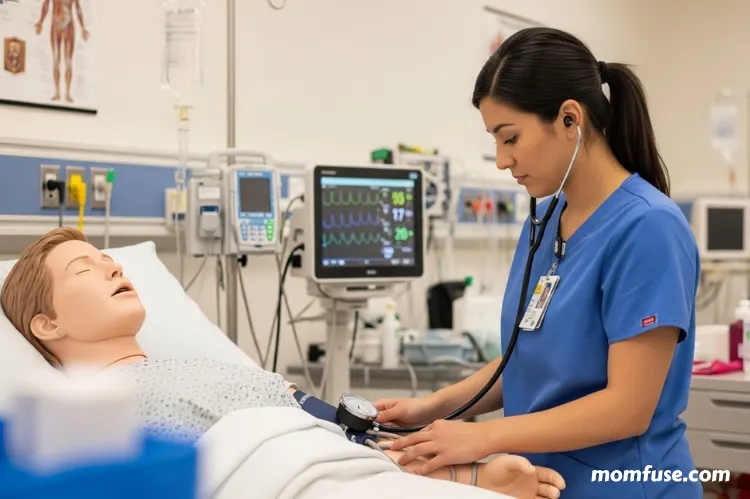
At the beginning of the program, you specialize in basic sciences and nursing fundamentals. Anticipate reading, quizzes, and discussion posts online. Look forward to the days when you will have the opportunity to practice skills such as taking vitals and starting IVs.
This is followed by clinical rotations. You operate under authorized experts. You follow facility rules. Hours and competencies are logged. Background checks, immunization, and drug screens are required in schools. The steps safeguard patients and students. Checking processes is time-consuming. Start early. To ensure your placement is not slow, when you have documents, make copies.
Rules and risks to keep in view
Nursing education has an explicit set of rules. To move on, you have to fulfill academic standards. You have to complete licensure exams upon graduation. Each state has its licensing conditions.
The process of clinical work is associated with physical and emotional tension. Long hours happen. Patient care is associated with stress. At school, they teach coping and ethics, but the job still challenges you. Debt is also worth consideration. Anyway, tuition costs vary, but are hardly ever cheap. Money can do it, but grants are awarded based on eligibility.
The upsides that keep moms enrolled

Nursing is a field that presents actual impact. You see the results of your work. You assist human beings in difficult situations. Citing the purpose is one of the reasons why many nurses remain. Career mobility stands out. You may go ahead with experience and education. Specialties give the opportunity to specialize in things you are interested in. Later on, leadership and education positions become available.
Transference of skills is inter-setting. Roles can be rearranged without new beginnings in case of changes in the family’s needs. The flexibility is attractive to parents who are long-term planners.
A future worth backing

You are already spending every day on your family’s future. Investing in improving yourself will help that objective. There is now the recognition of adult learners in education models. They do not give up effort and planning, but they allow for real life.
You do not need to rush. You must believe that your way matters. Nursing requires patience, grit, and care. These are the qualities that you employ on a daily basis. Imagine having children who are watching you study. Imagine them being taught that there is more growth to come. That learning is longer than any credential.
Read Next: Child Mental Health Signs Parents Should Never Ignore

Jessica Fuqua is a mom of two who writes about the messy, beautiful reality of raising kids. She believes parenting advice should feel like a conversation with a friend, not a lecture. When she’s not writing, she’s probably reheating the same cup of coffee for the third time.