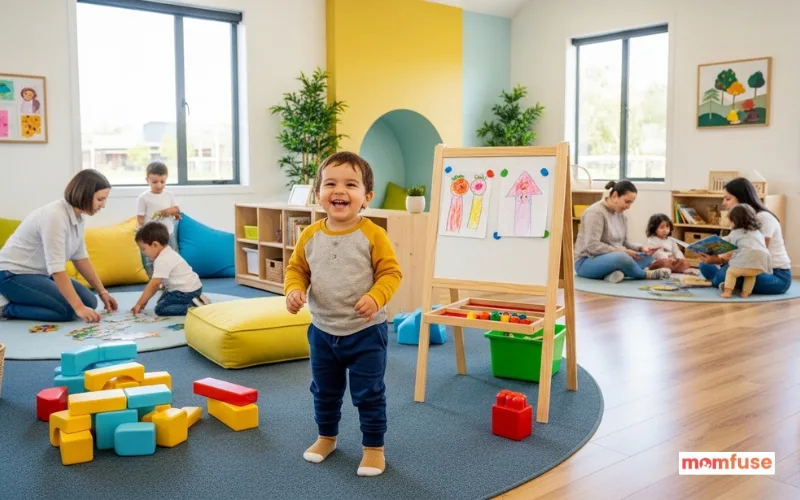

By 2026, early childhood choices in Iowa aren’t made in a vacuum. They sit where work pressure, brain development, and institutional stability collide. Parents aren’t “shopping for care” anymore—they’re underwriting systems. Early education has stopped being a temporary solution and started behaving like infrastructure. The real question isn’t where your child spends the day, but what kind of machine they’re inside—and whether that machine quietly supports your family or slowly drains it.
1. Two Systems, One Child: Watching vs. Building
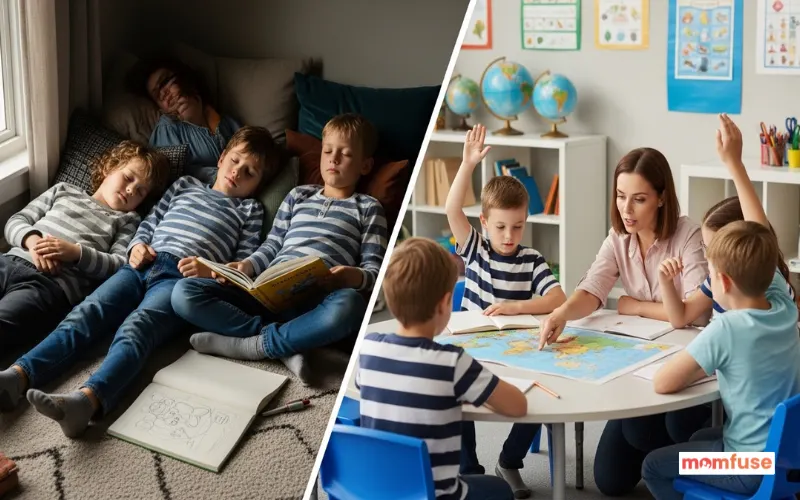
In 2026, saying “daycare and preschool are different” isn’t just a linguistic preference—it’s an Operational Audit of how your child’s time is spent. While many modern Iowa facilities blend the two, the “job” each one performs for your family is fundamentally different. Daycare exists to hold the day together. It keeps children safe, fed, rested, and socially occupied while parents work long hours. That’s not trivial—it’s essential—but it’s not developmental strategy.
The best Preschool in Des Moines evolves beyond play; they curate prepared environments where hands-on, self-correcting discovery meets expert guidance. That helps shape how a child thinks, regulates emotion, uses language, and handles structure. This builds child independence and cognitive resilience, all sustained by an unwavering operational foundation.
In Iowa, where nearly three-quarters of young children have all parents working, these two worlds are colliding. The best programs don’t force families to choose. They combine full-day reliability with real cognitive design. The difference isn’t the sign out front—it’s whether the system can deliver care and growth without wobbling under pressure.
2. When Timing Becomes Biology

This decision feels emotional, but the body decides first. From six weeks to two years, children are wiring safety. At this stage, consistency beats enrichment every time. New faces, rotating staff, and constant change teach the nervous system to stay alert—not curious.
Around two to three years, something shifts. Children start absorbing rules, routines, and language patterns almost automatically. This is where structure stops being restrictive and starts becoming useful—if it’s introduced gently.
By age four, Iowa’s September 15 cutoff opens public preschool funding. The smartest moves don’t chase free hours—they integrate them into full-day environments so the child’s rhythm isn’t fractured. This isn’t about accelerating childhood. It’s about meeting the brain where it already is.
3. The Market Reality Most Parents Learn Too Late
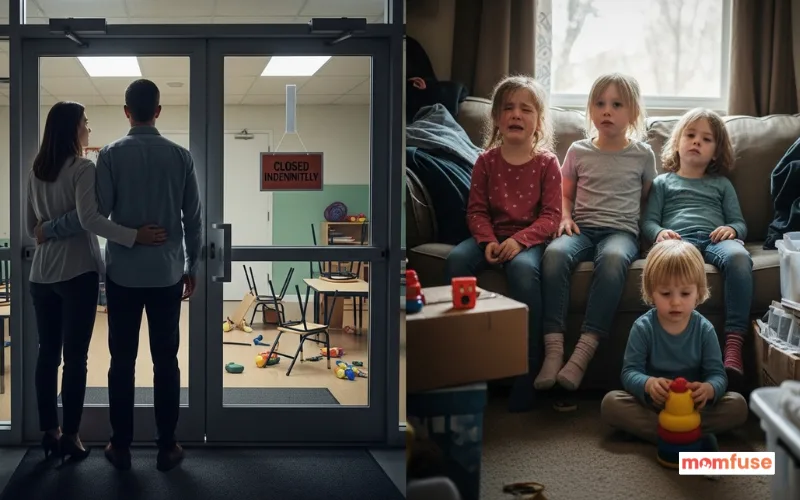
Iowa didn’t just lose childcare providers—it lost stability. More than 38% of registered programs are gone, and families now lose $3,350 a year to disruptions most don’t plan for. Closures. Staffing gaps. Sudden schedule changes.
Meanwhile, infant care averages nearly $13,000 a year. At that level, “it seems fine” is an expensive gamble. Weak programs don’t announce their decline. They shuffle classrooms, rotate substitutes, and slowly offload stress onto families. Strong programs do the opposite. They act as buffers—protecting your time, your work performance, and your child’s emotional energy. The real return isn’t a lower bill. It’s fewer breakdowns.
4. Signals That Matter More Than Tours

You don’t need jargon to spot problems—you need honesty.
- Screens calming toddlers usually mean adults are overwhelmed
- Avoiding IQ4K participation signals comfort with minimum effort
- Evasive answers about teacher tenure point to instability
The alternative isn’t choosing between daycare and preschool. It’s choosing environments that intentionally blend both—places where full-day care doesn’t come at the expense of growth, and learning doesn’t disrupt family logistics. As such, programs built around balanced learning don’t rely on heroism of holding chaos together. They rely on systems that work even on hard days.
In essence, mastering the “Daycare vs. Preschool” distinction in Iowa isn’t just about picking a building—it is about Economic Self-Defense and Biological Architecture. In a state where 74% of children have all parents in the workforce, choosing correctly isn’t just a “parenting win”; it is the ultimate leverage for family stability. The most critical advantage of a perfect choice is alignment with your child’s brain development.
Read Next: School Counseling Explained for Parents and Families
