


School counseling has a low profile but a potent presence, helping children respond when learning becomes challenging or life overwhelms them. Hopefully, your child will never require counseling but with or without it, knowing how the system works, where it fails and how you, as a parent can intervene can help ensure that your child has a good safety net in case they require it.
Whenever someone discusses counselors in schools, the discussion remains theoretical, although the effects on your child can be all too real. It might not be a parent but rather a school counselor that your child can rely on in times of a difficult friendship issue, when your child feels anxious or unsure of their future, or when they are looking to the future.
Most parents tend to seek counseling services only when something goes amiss. Due to the lack of clarity in expectations, frustration will accumulate on both sides of parents and school, since the families will assume that support will be automatic when the schools are dealing with scarce time and resources.
Knowing what is to be offered in counseling, as well as a sneak preview of areas where counseling fails to deliver, can help you shift from a state of confusion and helplessness to one of being informed and ready.
What School Counselors Do Well (When the System Works)

The benefits of school counseling can be seen beyond grades and behavior reports when it is delivered as it should. Counselors are also trained to guide the students through the academic, social, and emotional worlds, which means that your child has someone at school whose vision extends to the child in terms of academic achievements, and in the future, not just one test score, as that is quite a short-lived thing to determine academic achievement.
A counselor can assist a child to deconstruct daunting tasks, discuss it through stress prior to the onset of avoidance or to help them work through a stage of victimization.
Since counselors work with teachers and administrators, they can bring forward changes that will help your child succeed, even if they are not big changes to school policy and may go under the radar. You may find that there is better communication or you can understand the needs of your child better or that you make an attempt to move up in grades more smoothly.
Whereas one can easily ignore these small victories, they do count: they will build trust with the school and teachers, making your child feel safer about asking for assistance when more serious issues arise.
Where Counseling Falls Short and Why Families Feel the Impact
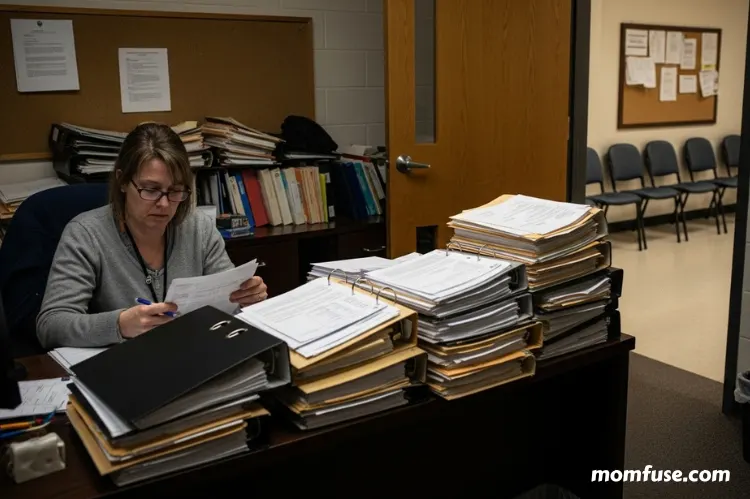
The system surrounding even the best counselors is a limitation, and this is where many families will start to get frustrated and even the counselors themselves. In certain schools or neighborhoods, one counselor might have thousands of students, making it difficult to ensure meaningful one-on-one time, and so children who might not be in as pressing need may have to go without entirely.
You might discover that meetings are hurried, follow-ups are longer than they are promised or your child cannot get the help when they are most in need, two typical examples being tests and after-grade changes. This strain is not found only in one district or state.
A recent report of CBS News report states how schools in the United States are still in short of mental health professionals, such as counselors and psychologists, even as the awareness of the needs of students is becoming more dominant.
How to Tell If Your Child’s Needs Are Being Met

Not all parents may notice that their child is receiving the support that he or she needs, though there are certain symptoms that one can be alert to watch: specifically, you may note the change in mood, motivation, school avoidance, and ask the child whether he or she has made an attempt to talk to someone at school.
When your child insists that he/she does not have an idea who to turn to, or when he/she is turned away after making the effort to speak to somebody, then that is a very important information.
Meanwhile, the open communication with the school might clarify a great deal. You could enquire about how students seek counseling, how urgent issues are addressed and how parents are kept posted and openness may tend to be a healthier process. Always keep in mind that a counselor is a person, and most likely he/she has other clients (for whom he/she cannot provide information), so delays may be due to workload and not to a lack of concern.
Knowing this balance makes you an advocate without taking ill intent to heart, and consequently makes the conversations work constructively, not adversarial, or even turn into a battle with a child trapped in the middle. You all are interested, after all, in happier and smarter and sociable children.
How You Can Advocate for Better Counseling Support

The school decision-making also involves parents in counseling services, although you may not feel that you are involved in the process. They are also either entangled in a backroom position in some situations or they are directly engaged in others. First, establish rapport with your child’s counselor in order to create trust and show that you are willing to share joint responsibility:
tell them what you observe at home, inquire how you can assist in coping mechanisms and explain what follow-ups will mean so that your expectations are realistic.
Collective advocacy is important as well. Questions may be raised on parent groups, surveys or meetings with the school board, in relation to counselor-to-student ratios, mental health training and referral systems. Although these deliberations might seem sluggish, it builds up pace to change in the long run particularly when many families have common issues.
Given that schools are responsive to the needs of the community, uniform calls within students’ homes will help ensure that counseling is a significant service and not a mere box-ticking exercise. Despite the imperfection of the system, this gap can be closed by informed parents and promote collaboration and help to form the environment at the school where children, their parents and even teachers can be safe, heard and supported.
Read Next: Finding Safe and Supportive Childcare Environments

Jessica Fuqua is a mom of two who writes about the messy, beautiful reality of raising kids. She believes parenting advice should feel like a conversation with a friend, not a lecture. When she’s not writing, she’s probably reheating the same cup of coffee for the third time.