
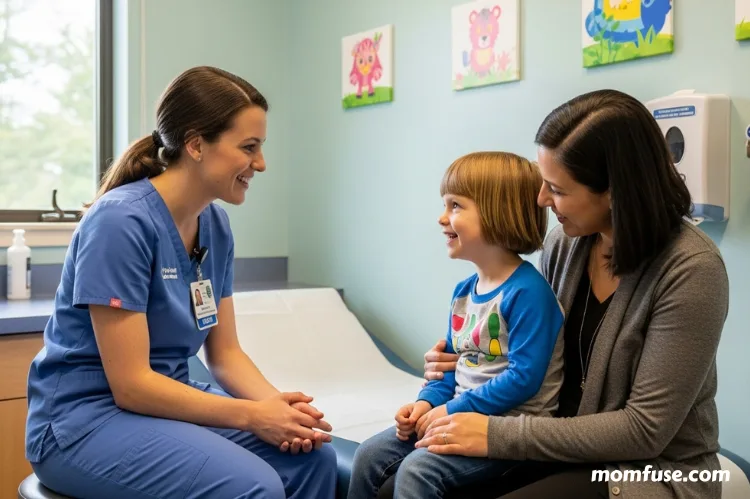

Any parent who has ever spent much time caring for a child knows that there is hardly a clear line at the end. Children develop, evolve, backslide, leap, and shock the whole world. The same rhythm is applied to their health. It is fashioned by trends, not by time; by watching, not by necessity; and by long-established confidence.
That long view is important in pediatrics. Well-being is not found in a fix or even individual appointments. It is formed by repetition of communication, the faces, and a constant knowledge of how a child evolves as one matures. In this method, the health process is understood not to be fixed, particularly during childhood, and regularity may be as significant as treatment.
The needs of children are also not developed in neat steps. What seems important at one age may disappear very quickly, while something small can be developed gradually. The pediatric care is modeled around this fact. Participation in such shifts supports children and families with continuity and reassurance, as well as clinical care, since PNPs are there throughout.
The Role Pediatric Nurse Practitioners Play in Ongoing Child Health

The topic of childhood health may be unpredictable. There is the burst of growth, environmental transformations, emotional growth, and everyday sickness, and occasionally it is difficult to determine what needs to be addressed on the actual sense.
Pediatric Nurse Practitioners participate in this complication and assist children in managing routine health and developmental milestones, and acute issues that might manifest and disappear as fast as they are manifested.
To families, such continuity is priceless. The presence of the same clinician over time ensures that the child’s history is not assembled solely from notes. Patterns become clearer. Minor variations can be identified more easily. Trust grows naturally.
Pediatric Nurse Practitioners tend to be a reliable source of information for families in times of uncertainty, helping them know what is normal and what warrants notice when they need to take the next step.
Special training is an indicator of that responsibility to nurses whose interests are in this field of practice. The duration of PNP programs online is predetermined to develop the depth of knowledge and judgement needed to provide long-term care in pediatrics, in which decisions are rarely made in isolation and experience is gained over time.
Long-Term Care Looks Different for Children
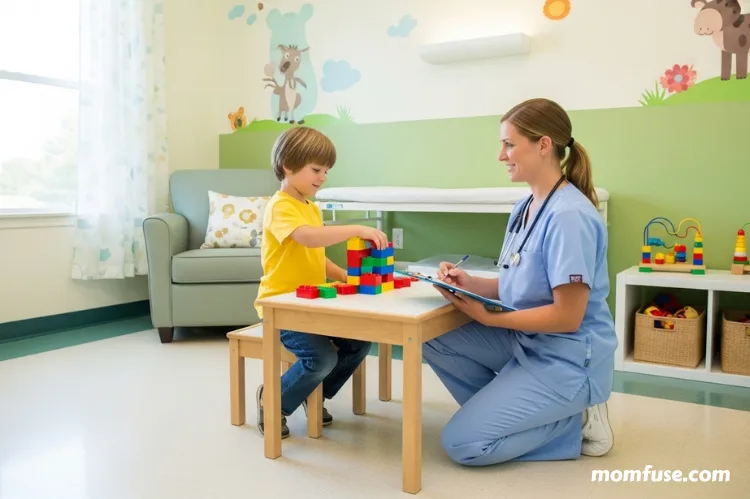
Children are not just small-sized adults. They also develop and transform rapidly and unpredictably their needs, physical, emotional, and behavioral. What appears to be normal at a certain developmental stage may be something that appears threatening to a certain stage thus development rarely follows a linear path. As a result, pediatric care emphasizes observation and follow-up.
It is not always the way a child develops in a short period of time, but in weeks, months, and even years, which is what defines improvement. Behavioral, mood, and emotional regulation changes may be equally significant as physical symptoms. The long-term well-being usually rests on the ability to see these changes early and act deliberately rather than reactively.
This process is facilitated by consistency in care. When patients and their families are reintroduced to a clinician they know, issues are addressed not only alone but also in context. Such continuity helps maintain responses that are proportional, knowledgeable, and grounded in a genuine understanding of the child.
Pediatric Care Extends Beyond the Child

When dealing with the children, the family is almost always involved in care. Even when parents and caregivers can hardly find words, they are the first to question why it is not quite right. Spending so much time listening, asking questions, and translating those issues into clinical understanding, PNPs tend to spend substantial time doing so.
This is especially so when emotional and behavioral well-being is concerned. It is not often that conversations about development or mental health are based on one appointment or diagnosis. Rather, they develop slowly. Having knowledge about possible signs of concern can be used to facilitate those discussions in a non-threatening way. The goal is understanding each other which is cultivated by free interaction among families and the clinicians.
The Scope of Practice Pediatric Nurse Practitioners Are Trained For

Pediatric Nurse Practitioners are educated to handle a variety of duties, including preventive care and health screenings, as well as the diagnosis and treatment of the most common diseases. Their practice range is a result of clinical expertise and accountability, supported by well-articulated professional standards.
The responsibilities of the role, as per occupational data, include high-level clinical decision-making, patient education, and working with larger healthcare teams.
This experience in a pediatric setting is combined with developmental knowledge and interpersonal skills that can support proper care delivery to children and their caregivers. The position is to provide informed judgment and continuity across the numerous childhood phases.
Balancing Clinical Expertise with Real Family Life
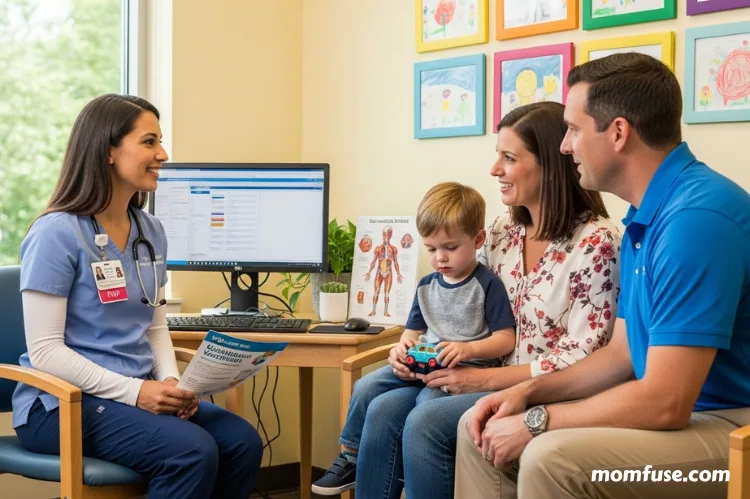
Rarely does pediatric care occur outside of daily life. The schedules are determined based on the school schedules, labor and the family activities. Pediatric Nurse Practitioners do not ignore these realities and offer realistic, practical and sensitive advice to address the needs of the families.
Distrust develops when families feel listened to. Children feel freer when they are in familiar care. This relationship is eventually incorporated into what supports wellbeing. It is not merely treatment but assisting families to be comfortable in the uncertainty of growth and change.
Education Pathways That Support Pediatric Specialization

To work in specialized pediatric positions, both the complexity and responsibility are required in the preparation. The educational programs are supposed to concentrate on the existing nursing experience and also on assessment, long term care planning and ethical decision making.
For many nurses, advanced education does not substitute for work and family life but aligns with them. It is not about speed, but being ready. Further education enhances the capacity to care for children over the years, reinforcing the consistent, gradual approach that underpins children’s long-term well-being.
Supporting Children Means Thinking Long Term
Patience, consistency, and informed care over time determine children’s well-being. Pediatric Nurse Practitioners operate at that slower pace, helping families to grow, adjust, and settle in. When the care is based on familiarity and understanding, it becomes easier to respond to change.
Health in the long term is seldom concerned with fast solutions. It is a matter of remaining, listening, and helping children to become what they are becoming.
Read Next: Play With Your Child for Healthy Early Development

Jessica Fuqua is a mom of two who writes about the messy, beautiful reality of raising kids. She believes parenting advice should feel like a conversation with a friend, not a lecture. When she’s not writing, she’s probably reheating the same cup of coffee for the third time.