

You might be reading at a time when a person is requesting snacks. Par for the course. You are reading this, perhaps, with a laundry load on your hands. Nothing new there. Or more coffee can be replaced with a new career. That is something that lingers about.
Nursing can be a career that meets most of your demands. Of course, it does not imply that it will be a simple task. However, it implies that it fits the skills you use daily.
Nowadays, one may encounter flexible training that combines online and in-person components.
Other ones are referred to as hybrid learning. These include neonatal nursing online degree programs, which allow you to study the important theory at home and even receive actual clinical experience. Such programs may include methods for caring for newborns, evaluating their well-being, and supporting families, achieved through video lessons and local clinical placements. They are the ideal careers among moms.
How Hybrid Learning Works and Why It Helps You
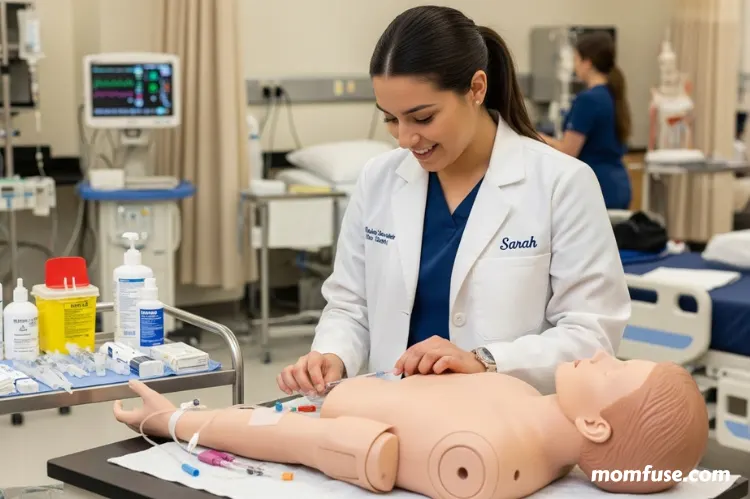
Hybrid learning means you will do some of your learning online and some in a real clinical or campus environment. The online aspect includes lectures, discussions, and assignments that you can complete at your convenience. The face-to-face component is often a clinical practice, skills laboratory, or hospital simulation exercise. The e-sections will allow you to study at your convenience with children, jobs, or shopping. The practical components ensure you develop the skills nurses need. This combination helps you balance life and study.
Hybrid programs usually allow students to watch recorded lectures multiple times. They provide technology such as online classrooms, videos, and quizzes to make you learn at your own pace. You can also keep deadlines and scheduled virtual meetings. You can also have clinics or laboratories on fixed days. To do it all, you need a stable internet connection, time, and some planning.
The model is more effective than pure online learning when you need to develop physical skills, such as taking vital signs or administering injections. The latter is performed with actual teachers and actual machines. Hybrid learning will minimize travel requirements and help you save money on travel or childcare expenses during your education. It can also help you build time management skills that are important in nursing work.
Why Moms May Bring Strengths to Nursing

You already have enough priorities. Organizing, problem-solving, and caring are the daily activities. Those are fundamental nursing skills. They do not guarantee success, but they align with the job requirements. You are probably able to make plans at the last minute. Nurses often do too. You know how to speak clearly, to reassure, and remain nonchalant when stressed. Those matters in patient care.
The informal experience of raising babies, those who are older, or others, may have already been gained by you. Nursing incorporates that instinct and introduces science, judgment, and safety practices. That is to say that there is formal training and supervision involved in the deal. However, your background of sympathy and practical ability can provide you with a jump that some students have to make themselves.
Licensure is needed in nursing in most instances. In the US, the NCLEX exam follows a degree or diploma in nurse education. Background checks, health checks, and immunizations are also procedures that are usually mandated. These rules are safeguards. Anticipate them, and organize time for deadlines and paperwork.
Nursing in Practice

As soon as your programme and any necessary exams are over, work in real settings starts. Nurses operate in hospitals, clinics, community health centers, schools, and homes. Others are adult wards, others are children’s wards, and special wards such as neonatal units. Neonatal nurses care for newborns, particularly premature or ill infants. Preparation for the same may require additional coursework and clinical practice time devoted to the health, feeding, and safety of newborns.
Most nursing shifts are long. In most countries, shifts may be 8, 12, or more hours. You can work days, nights, weekends, or holidays. Part-time schedules or flexibility are found in some clinics or wards. The other ones require full-time employees and fixed-time regulations. You will be asked to provide details to your employer or local health system during an interview or application.
You are also supposed to be physically prepared to work. The nurses are on their feet all day, carry or hold their patients, and are called upon in emergencies. The material aspect is not the only one. Much of nursing involves communication, record-keeping, making arrangements, and liaising with physicians or therapists. Human connection is the component that many nurses claim is the most important.
A Few Things to Consider

No profession comes without its disadvantages. Nursing can be demanding. The hours are long. The pace can be fast. There are emotional situations that may occur to you. People can be sick or dying. That can weigh on you. There are shifts that are understaffed. It is an issue in certain regions, though many employers try to address it.
Hybrid learning is flexible. It also expects discipline. You might have to reserve the study time when there is a high need in the family. Deadlines don’t change. Online communication can be lonely, especially when you prefer discussing things face-to-face. You might have to attend planned online sessions, which complicates childcare planning. Clinical placements can be such that by a given start time, you have to be at a hospital. Know this before you start.
Upsides of Nursing

There are stable nursing demands in most countries. Healthcare systems tend to need nurses year in and year out. You can find opportunities either in your local area or abroad. There are many ways you can take. You may become specialty-, education-, leadership-, or research-based. There are nurses who specialize in community work, others in critical care, and others in family health.
Salaries vary significantly by country, region, and position. It also increases with experience and qualification. Other employers offer benefits such as pensions, sick leave, or childcare. Teamwork can develop friendships. You encounter people with various backgrounds. Many nurses consider this the purpose of the work, despite the exhaustion.
Why It’s Never Too Late to Learn Something New

Now that you may be asking, is this the time? Your children may be small. This might be because you are back to work after some time. You may be changing careers. Nursing education can be offered at many ages. Individuals aged 30 to 40 and 50 and above graduate with full nursing degrees and prosper. Don’t worry about age.
It involves commitment, planning, and support. You may begin with information sessions, interviews with admissions personnel, or with working nurses. See what fits your life. Divisions into part-time, flexible, and hybrid options can give you an opportunity to remain with your family in the center as you develop a new ability. It can be made to work with planning and realistic expectations. You don’t have to rush. Just begin.
Read Next: Online Nursing Programs That Support Moms Career Goals

Jessica Fuqua is a mom of two who writes about the messy, beautiful reality of raising kids. She believes parenting advice should feel like a conversation with a friend, not a lecture. When she’s not writing, she’s probably reheating the same cup of coffee for the third time.