


Why is it that toddlers oppose to diaper changes? The resistance of your little one is absolutely natural and due to the increasing independence of this child, some physical pain or even the irritation of the child at being interrupted in playing games. Parents with fidgety infants and crying babies during the changing period have a hard time trying to change them, and it becomes an event close to an Olympic competition.
This guide will assist you in making the change of diapers more peaceful, and you will have strategies that can make the process of changing the diapers more peaceful that you can begin using now.
Setting Up a Peaceful Changing Area
Organizing Diapering Essentials
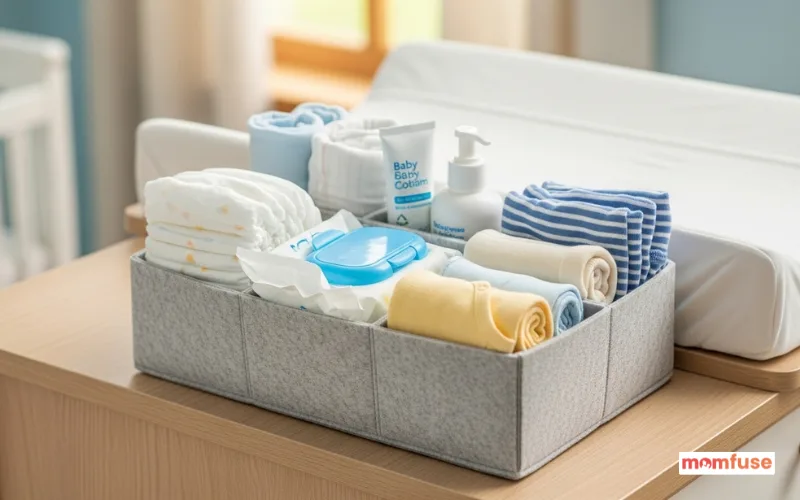
Proper arrangement of diaper supplies will save time and decrease stress in the process of changing diapers. Store commonly used things within the reach of your changing space. This will enable you to hold a baby with one hand and get the things you need with the other.
Diapers, wipes, and creams are stored in one caddy /basket. This mobile system can be transferred between rooms with ease such that you will have supplies wherever adjustments are necessary. Clear containers make you notice when there is need to renew items fast.
Have more than basic essentials in your changing station. Add additional supplies such as hand sanitizer, dirty item plastic bags, and change of clothes in case of unexpected messes. The additions make changes not to be interrupted.
The inconvenient shortages are removed by frequent replenishment. Inventory checks on diapers should become a routine part of your weekly schedule and the back-up must be kept somewhere that is easily available to you. This practice will make sure that you do not encounter an evolving crisis and have no adequate resources.
Lastly, as a way of maintaining the cleanliness of the space, one can have diaper pails like the one in Diaper Genie which are meant to simplify the process of disposing diapers on a daily basis.
Choosing The Right Changing Pad

The most appropriate thing in the diaper-changing process is to find the right changing pad. This is a home where your baby is spending most of its time and it must finely be comfortable. Search pads that have soft and cushioned surfaces and are supportive enough.
When choosing a changing pad, safety features are very important. Look at high-rise or safety straps to eliminate rolling or falling. These factors are of particular benefit when you have an active and wiggly baby during transitions.
Cleaning is among other practical factors at the top of the list. Waterproof surfaces prevent messes and can be wiped down rather fast after unavoidable accidents. There are also pads that have removable and machine-cleanable covers.
Size compatibility should also be considered. Measure your changing or dresser and buy it so that it fits correctly. A lot of parents love portable things that have light weight designs to change around the house.
A good toddler changing mat is a form of investment in comfort and convenience in everyday life. The right pad will also change a difficult diaper change into a smooth one on your part as well as your baby.
Maintaining Hygiene and Safety

Sufficient hand washing is the basis of hygienic diaper change. Wash hands effectively before and after changing so that germs are not contaminated. Keep a hand sanitizer that will be used in the circumstances in which immediate hand washing is impossible.
Washing your changing surface frequently would prevent bacteria growth. Clean the area with the help of proper cleaners each day, and take care of any noticeable dirt in time. The practice keeps your baby safe against possible infections.
Disposing systems are safe and minimize smell and trap germs. Your changing space is kept clean using diaper pails with locking lids and odor lock. You should empty such containers as frequently as possible to make sure that you have a healthy environment.
Do not leave your baby on a changing surface even in a short time. Use one hand to hold your little one all the time so that you do not fall. Prepare all the supplies required at hand before commencing change to avoid the act of stretching.
Diaper changing can also be relieved by replacing baby wipes with cool water to avoid irritation. This soft procedure is very pleasant to sensitive skin and works better than dry wipes. Use paper towel instead of rubbing in order to minimize pain.
Step-By-Step Techniques for Calm Diaper Changes
Engaging With Distractions and Toys
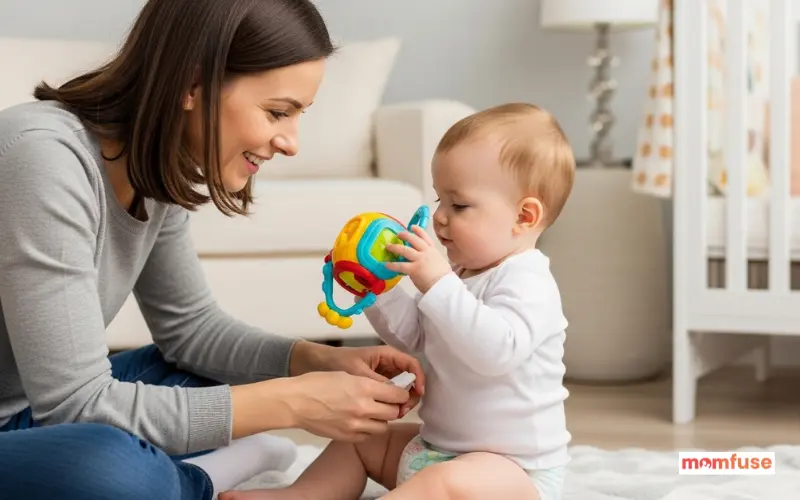
It can be easy to use this diaper changing time to interact with your baby in a positive way by ensuring that your baby remains active during the process. Intelligent parents never fail to keep a special diaper change toy on hand, that is, something that your infant will never have encountered before and, in this case, is novel and exciting every time.
These are useful distractions to consider:
- Board books that they can have in color.
- Soft toys of various textures.
- Light-up toys which are attention-seeking.
- Toys with music playing soft music.
- Baby teething rings that babies need to chew.
The way you do it should depend on the baby age. The infant younger ones may love viewing the high contrast black and white pictures, whereas the older ones can take interactive toys that they can handle very well. Singing favorite songs or playing peek-a-boo during change is a successful strategy of many parents.
The trick is rotation: alternate toys, in order to keep the interest. The distraction every couple of days ensures that you do not get bored and your baby will always be anticipating the diaper time, not struggle to get in one.
Narrating The Process to Soothe Babies

Demonstrating all the steps that make up the diaper change process will help to provide a relaxing environment to your baby. Your voice is your comfort and a distraction, as it makes your little one know what is going on.
Try using phrases like:
- Now I will raise up your legs you see.
- Wipe you off, so that you feel better.
- It is time to be changed to a fresh diaper.
It is important how the tone is. Use the gentle and soothing voice that speaks safety and concern. A higher pitch and overstated expressions, what child development experts refer to as parentese, are often positively received by many babies.
The continuity of the narration adds a predictability to the routine. Your baby gets to know how to expect every step and feel less anxious about it. This form of running commentary also facilitates the development of language by coining new words and concepts when undertaking a day to day activity.
Parents who recount diaper changes regularly complain that their babies end up cooperating with time, because the words used at the same level makes the babies aware of what to expect in the same routine that is essential.
Bonding Through Eye Contact And Gentle Talk

The ideal moments of bonding with your infant are the times when you change their diapers. Eye contact creates an immense connection that will comfort your little one at the time they feel vulnerable.
Smile at your baby and look directly at him. This in-person communication releases oxytocin – also known as the hormone of bonding, in both of you, and bonds your relationship.
Light talk when making changes makes your baby to be linked with the positive attention to this routine. Such remarks as I see you smiling at me or That big beautiful eyes are watching everything are ways of recognizing that your baby is a person and not a job to be done.
Another level of comfort is the physical touch, which is not required in cleaning. Light belly tickles, foot rubs or flirtatious nose boops transform useful situations into love.
When parents regard diaper changes as a way to strengthen their relationships, as opposed to a task to be done, they will be more apt to do this in a more tolerant manner. Your relaxed attitude is passed onto your baby and the cycle of positive interaction is created that makes the diaper time enjoyable to both parties.
Preventing And Addressing Diaper Rash

Diaper rash may transform changing of diapers into unpleasant experiences of your baby. Prevention begins by ensuring that the changes are regularly done, at least every two hours throughout the day, and once in the night in most cases.
Always wash your baby and then leave him or her to see to it that the skin dries up and then wipe him or her with a fresh diaper. A little air time during which the diaper is removed is very helpful in avoiding irritation caused by moisture.
Barrier skin is a type of skin protectants created between the delicate skin and the irritants. The majority of infants are sensitive to zinc oxide or petroleum jelly products. Use a thick coat when changing in case you observe the redness.
Be on the lookout of warning signs that demand medical care:
- Home treatment-worsening rash.
- Blisters, pus, or oozing areas
- Rash accompanied by fever
- Extensive rash outside the diapers.
In severe cases, your pediatrician may prescribe certain forms of treatment such as antifungal creams in case of yeast infections, or mild hydrocortisone used in case of inflammation.
Petroleum based products that may interfere with the absorbency should be avoided by the cloth diaper users. Rather, find cloth-diaper-safe options, such as coconut oil or specially designed creams.
Ensuring preventive care so that changing diapers is more comfortable to your baby and less work to you helps make a positive circle that only makes the process of changing diapers more comfortable to all parties involved.
Read Next: Play With Your Child for Healthy Early Development

Jessica Fuqua is a mom of two who writes about the messy, beautiful reality of raising kids. She believes parenting advice should feel like a conversation with a friend, not a lecture. When she’s not writing, she’s probably reheating the same cup of coffee for the third time.